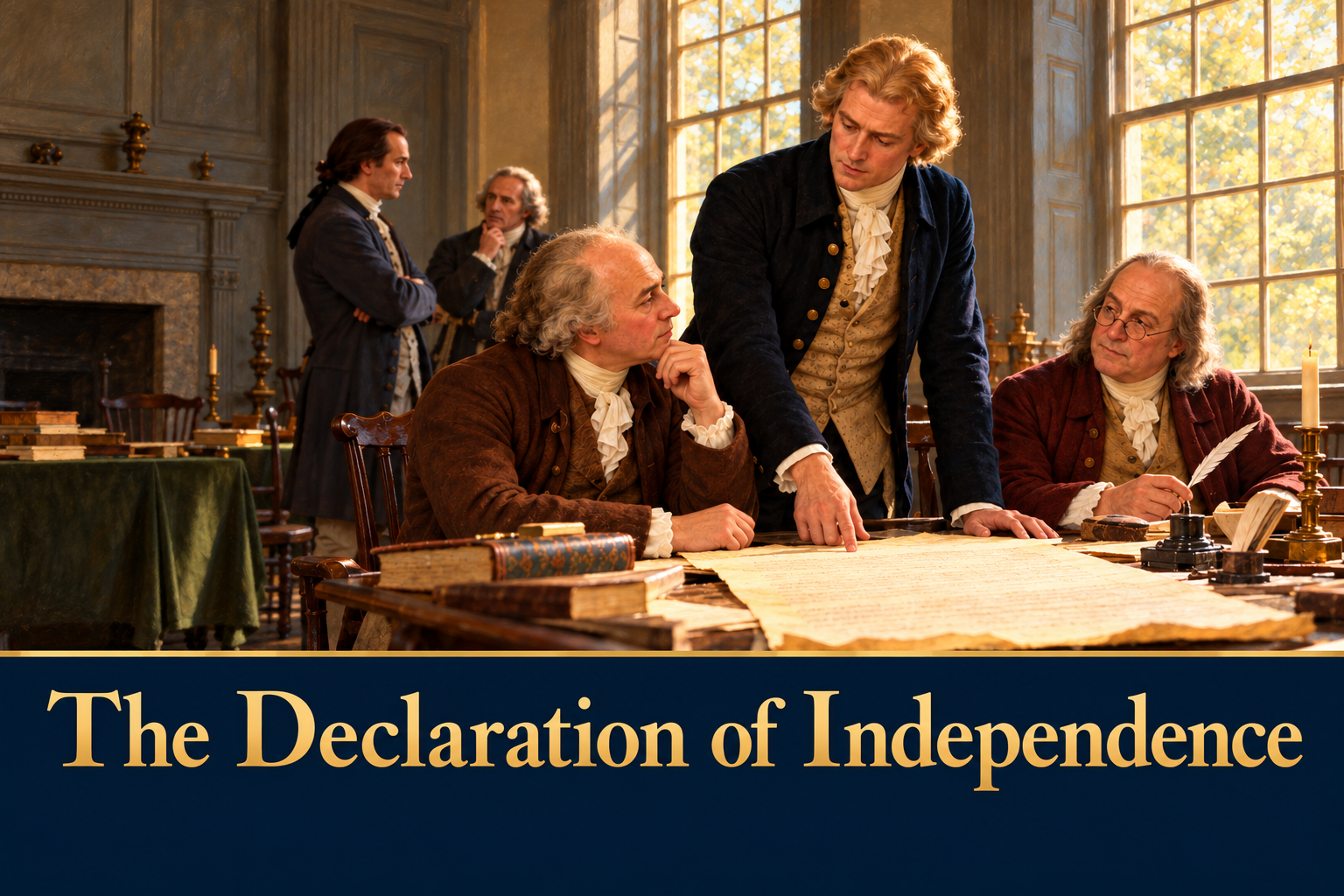
The Declaration of Independence
John Dunlap received an important manuscript on July 4, 1776. Congress had approved the Declaration of Independence, and the committee brought it to him for printing. Copies began leaving Philadelphia the next day. A decision made among representatives was becoming news their countrymen could read for themselves.
Near the beginning of the printed sheet stood the words “all men are created equal.” The Declaration went on to say that the Creator had endowed them with rights, including life and liberty, and that government existed to secure those rights. Americans were explaining their independence by first saying what they believed about people.
At the other end of the document, the representatives appealed to the Supreme Judge of the world concerning their intentions. They relied upon the protection of divine Providence. For the men making it, support for independence meant committing their own lives and fortunes; even their sacred honor was included in what they promised one another.
John Witherspoon is a good person to follow through that summer. In May 1776 he was preaching about Providence; before summer ended, he had signed the Declaration. He was one of the patriotic ministers now remembered as the Black Robe Regiment, whose teaching connected the desire for liberty with the conduct required of a free people.
The year before, Patrick Henry had addressed Virginia’s delegates at St. John’s Church in Richmond. His appeal became famous for its closing words, “give me liberty or give me death.” The account handed down to us also records his belief that God presides over the affairs of nations.
In New York, the Declaration reached men already serving in the army. Washington ordered it read to the brigades at six o’clock on the evening of July 9. That day’s orders called for chaplains, too, and reminded the soldiers of their need for heaven’s blessing. Hearing the words of Congress would help them understand the independence their service was helping secure.
Dunlap’s copies carried the Declaration out of Congress. Washington’s brigades heard its words, and the people of the new nation began living with the responsibilities independence would bring. Now it is our turn to read it. We inherit those rights and responsibilities, with much to thank God for along the way.
Remember this In 1776, the representatives claimed rights from the Creator and placed their hopes in His care. We have good reason to thank Him for the liberty received through their work.